

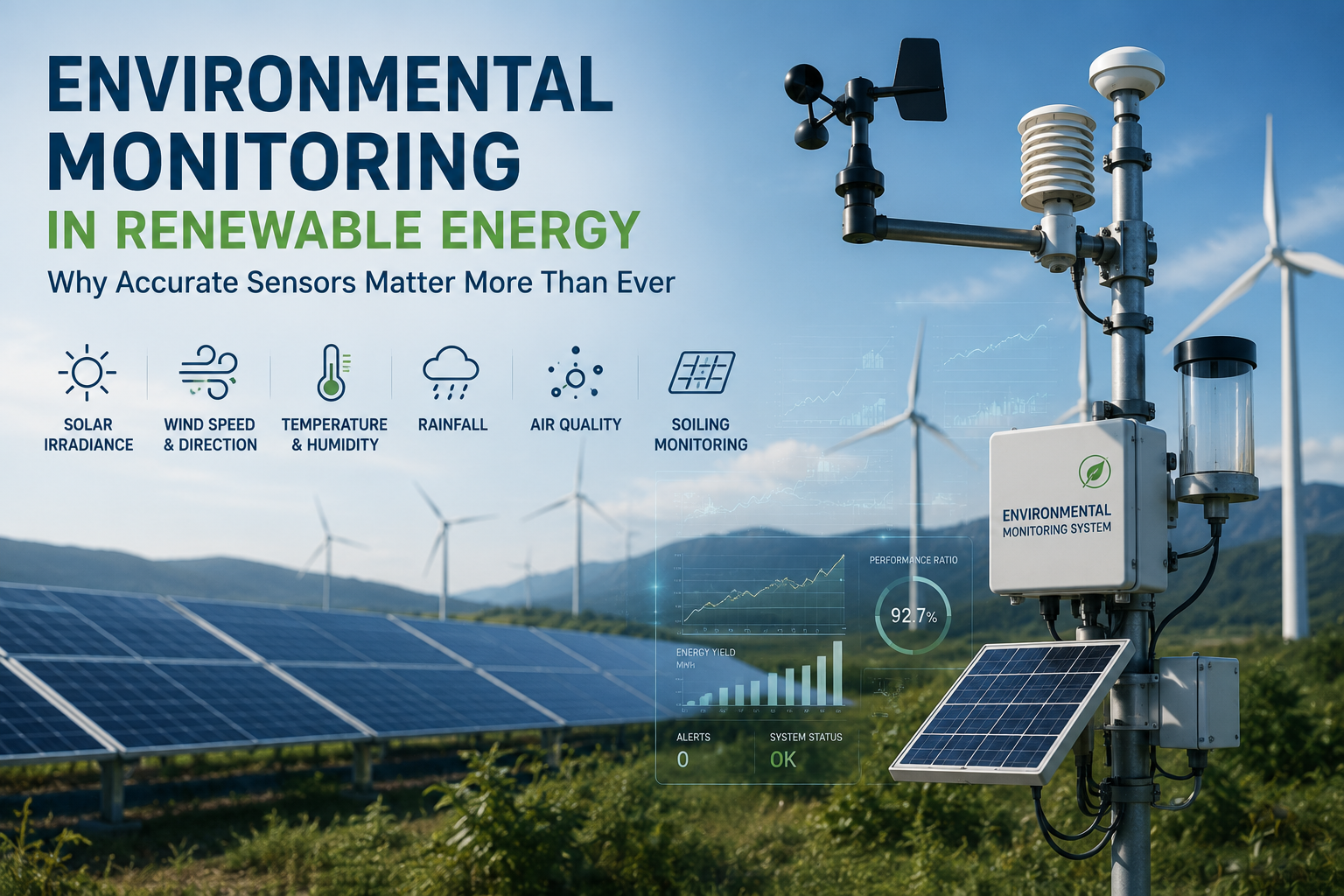
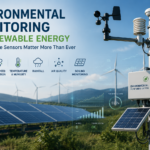
Yenilenebilir Enerjide Çevresel İzleme
Hassas Sensörler Neden Her Zamankinden Daha Önemli?
Yenilenebilir Enerjide Çevresel İzleme: Hassas Sensörler Neden Her Zamankinden Daha Önemli?
Yenilenebilir enerji projelerinin dünya genelinde hızla yaygınlaşmasıyla birlikte, doğru çevresel izleme artık isteğe bağlı bir özellik değil, temel bir gereklilik haline gelmiştir. İster bir güneş enerjisi santrali (PV), ister bir rüzgâr santrali ya da endüstriyel enerji tesisi işletiliyor olsun, güvenilir sensör verileri; verimlilik, ekipman güvenliği, bakım planlaması ve uzun vadeli yatırım getirisi üzerinde doğrudan etkiye sahiptir.
Modern çevresel izleme sistemleri, enerji üretimini optimize ederken operasyonel riskleri azaltmaya yardımcı olan sürekli ölçümler sağlar.
Çevresel İzleme Neden Önemlidir?
Yenilenebilir enerji sistemlerinin performansı büyük ölçüde çevresel koşullara bağlıdır.
Aşağıdaki faktörlerin tamamı enerji tesisinin performansını doğrudan etkiler:
- Güneş panellerinde kirlenme (Soiling)
- Güneş ışınımı (Solar Irradiance)
- Ortam sıcaklığı
- Panel sıcaklığı
- Rüzgâr hızı
- Rüzgâr yönü
- Bağıl nem
- Yağış miktarı
- Atmosfer basıncı
Doğru çevresel izleme yapılmadığında işletmeciler gerçek çalışma koşulları yerine tahminlere dayanarak karar verir. Bu durum verim kaybına ve bakım maliyetlerinin artmasına neden olur.
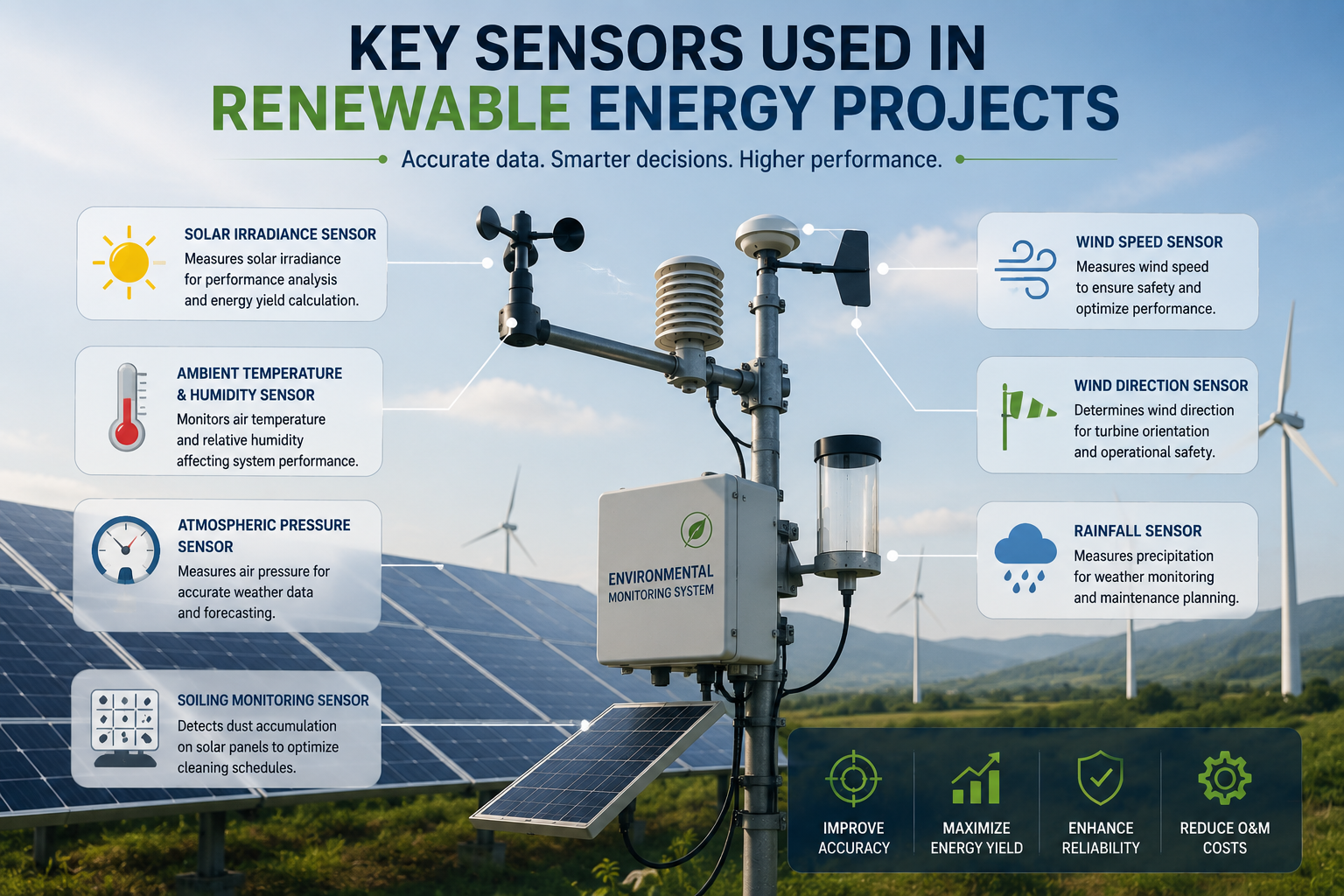
Yenilenebilir Enerji Projelerinde Kullanılan Başlıca Sensörler
Güneş Işınımı Sensörleri
Bu sensörler güneş panellerine ulaşan ışınım miktarını ölçerek sistem performansının hesaplanmasında referans verisi sağlar.
Kullanım alanları:
- Santral performans karşılaştırmaları
- Performans Oranı (PR) hesaplamaları
- Enerji üretim analizleri
- Kabul testleri
Meteoroloji İstasyonları
Tam donanımlı bir meteoroloji istasyonu, farklı sensörleri tek bir entegre izleme sistemi altında bir araya getirir.
Ölçülen başlıca parametreler:
- Rüzgâr Hızı
- Rüzgâr Yönü
- Hava Sıcaklığı
- Bağıl Nem
- Yağış
- Atmosfer Basıncı
Başlıca kullanım alanları:
- Güneş Enerjisi Santralleri
- Rüzgâr Santralleri
- Batarya Enerji Depolama Sistemleri
- Enerji Altyapıları
Panel Sıcaklık Sensörleri
Güneş panellerinin verimi sıcaklık arttıkça azalır.
Panel sıcaklık sensörleri gerçek çalışma koşullarının izlenmesini sağlayarak performans analizlerinin doğruluğunu artırır.
Kirlenme (Soiling) İzleme Sistemleri
Toz ve kir birikimi, güneş enerjisi santrallerindeki üretim kayıplarının en önemli nedenlerinden biridir.
Kirlenme sensörleri panel yüzeyindeki kirlilik seviyesini ölçerek temizlik planlarının sabit zaman aralıkları yerine gerçek verilere göre oluşturulmasını sağlar.
Başlıca avantajları:
- Daha düşük su tüketimi
- Azalan temizlik maliyetleri
- Daha yüksek yıllık enerji üretimi
Standart Ürünlerin Ötesinde Mühendislik Çözümleri
Her yenilenebilir enerji projesi kendine özgü çevresel koşullara sahiptir.Custom engineering Projeye özel mühendislik çözümleri sayesinde izleme sistemleri aşağıdaki uygulamalara uygun şekilde tasarlanabilir:
- Büyük ölçekli güneş enerjisi santralleri
- Yüzer GES sistemleri
- Rüzgâr enerji santralleri
- Hibrit yenilenebilir enerji sistemleri
- Endüstriyel enerji uygulamaları
Doğru sensör seçimi, sistem entegrasyonu, haberleşme protokolleri ve devreye alma süreçleri uzun yıllar güvenilir çalışma performansı sağlar.
Veri Ancak Doğruysa Değerlidir
Modern izleme sistemleri artık yalnızca veri kaydedici değildir.
Endüstriyel izleme çözümleri aşağıdaki sistemlerle entegre çalışabilir:
- SCADA sistemleri
- PLC kontrolörleri
- Endüstriyel IoT platformları
- Bulut tabanlı izleme yazılımları
Doğru kalibre edilmiş yüksek kaliteli sensörler; kestirimci bakım, performans optimizasyonu ve güvenilir karar alma süreçleri için gerekli olan doğru verileri sağlar.

Çevresel izleme, günümüzün yenilenebilir enerji altyapılarının en kritik bileşenlerinden biri haline gelmiştir.
Doğru sensörler, akıllı izleme sistemleri ve profesyonel mühendislik hizmetleri; enerji üretimini artırırken ekipman güvenilirliğini yükseltir ve proje ömrü boyunca işletme maliyetlerini azaltır.
Yenilenebilir enerji sektörünün büyümeye devam ettiği günümüzde, yüksek kaliteli çevresel izleme sistemlerine yatırım yapmak artık bir tercih değil, başarılı her enerji projesinin vazgeçilmez bir parçasıdır.
Bir yanıt yazın